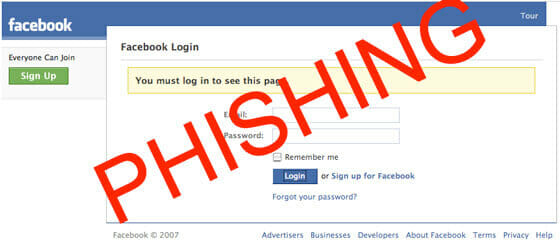
Nowadays phishing victims are increasing and more and more identity information is being stolen — and worst of all, they are also losing their money. Phishing is a criminal fraudulent process of attempting to acquire sensitive information such as usernames, passwords and credit card details by masquerading as a trustworthy entity in an electronic communication. Communications purporting to be from popular social web sites, auction sites, online payment processors or IT administrators are commonly used to lure the unsuspecting public. (Source: http://en.wikipedia.org/wiki/Phishing).
One of the most popular phishing techniques is link manipulation. Attackers create many similar links and spoofed websites that they lead to. The spoofed website will look very much the same in layout and design as the original website. Then they will capture your username and password that you input. Then they will use that information to open your original account and steal your information — and even worse, steal your financial data and money.
To avoid this phishing attack you can use a trusted search engine like Google, Yahoo or Bing. Input the most related keyword like: Facebook, MySpace, your bank name, and other websites that store your information details. Then that website should come at the top of the search results. It should be safer than manually typing the URL. Phishing attacks exploit human errors like typos. So using a search engine could minimize typo errors that could bring you to be attacked by the phisher.
And the other tip is: bank websites or other financial websites should use encryption and verification. So if you don’t see those security signs in the address bar of your browser, instantly close your browser and don’t continue to input your personal information. Because the attacker can easily get your information. And if your financial provider doesn’t use any security for their clients, tell them to use it or don’t use their services at all. It is for your privacy and safety.