Remote desktop on Ubuntu isn’t new. This has been known for a while. Even if it is not as good as Windows Remote Desktop, you can still connect to and control your Ubuntu desktop remotely. There are some tools to connect to your Ubuntu desktop remotely. You can use TightVNC to remote desktop on Ubuntu.
TightVNC is a cross-platform open source remote desktop software application that uses and extends VNC’s RFB protocol to control another computer’s screen remotely. It is a remote display program that allows you to run totally parallel sessions on a machine which you can access from anywhere on a LAN or over the internet. The server and all applications you start continue to run on it even when you disconnect.
Remote desktop on Ubuntu with TightVNC installation:
1. Open a terminal on your host computer or connect via SSH if it is in a remote location.
2. You need root access permission, or connect as root.
3. If your host (target) Ubuntu doesn’t have a desktop, you need to install it first:
apt-get install ubuntu-desktopIt will take a while; wait until it is finished.
4. Install VNC server:
apt-get install -y vnc4server xinetd5. Edit the xstartup file:
vim ~/.vnc/xstartup6. Find this command:
twm &Replace with:
gnome-session &7. Start VNC server:
vncserver :18. Now you need to download the TightVNC client and connect it:
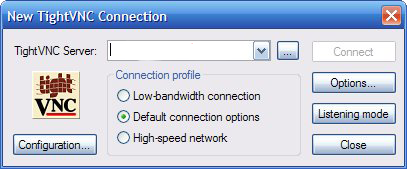
9. Put your server IP and press connect. It will prompt you for a username and password.
10. Connected!
This won’t work if your host is inside a private network or behind a firewall. To do that you have to configure your firewall to allow the connection to your host. Alternatively, if you want to connect to your Ubuntu at home, you can use TeamViewer instead. I’m not sure about the performance, but as far as I know TightVNC would be more secure and have lighter bandwidth consumption. As far as I know, to configure TeamViewer to connect to your host you have to set it to automatic login, which is not secure.
Download TightVNC
Download TightVNC for Windows and Linux.